

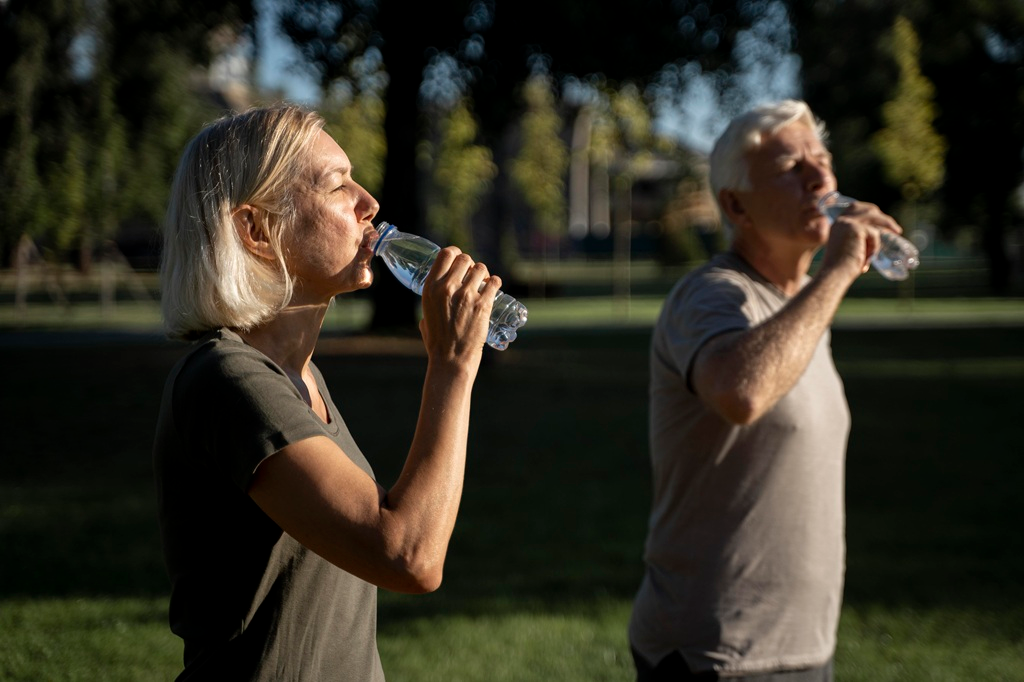
Why it’s important for people over 60 to drink enough water
One of the easiest and most effective things you can do for your health as you get older is to drink enough water. Body water helps with digestion, blood flow, temperature control, joint cushioning, and brain function. All of these things become more important and more fragile after age 60.
Why staying hydrated is more important as you get older
As you get older, the feeling of thirst may go down, so you might not feel thirsty even when your body needs fluids.
Kidney function and the body’s ability to hold onto water can get worse, which makes dehydration more likely.
Some medicines (like diuretics, some blood pressure drugs, and laxatives) and some health problems (like diabetes and heart disease) make you need more fluids or lose more fluids.
Even mild dehydration can make you dizzy, confused, constipated, have urinary tract infections, fall, and make it harder for you to get better from an illness.
How much to drink
Many older adults need about 6 to 8 cups (48 to 64 ounces or about 1.5 to 2.0 liters) of fluids each day, but this amount can vary based on their size, activity level, medications, and health problems.
Add fluids from drinks like water, milk, and herbal tea, as well as foods with a lot of water, like soup, fruits like melon and oranges, and vegetables like cucumber.
If you have heart or kidney disease or are on a fluid restriction, talk to your doctor about a personalized fluid goal.
Helpful advice on how to stay hydrated
Always have a full water bottle close by and drink from it often instead of waiting until you feel thirsty.
Put sticky notes in places where you spend a lot of time, like the kitchen or bathroom, or set gentle reminders on your phone.
If plain water doesn’t sound good to you, try adding lemon, cucumber slices, or a splash of juice to it.
Drink a glass of water between caffeinated drinks. For some people, caffeine can make them urinate more.
Add a drink to every meal and snack, and eat more foods that hydrate you, like soups, yogurt, and fruit smoothies.
Check the color of your urine. A pale yellow color usually means you’re well-hydrated, while a dark yellow color may mean you need more fluids.
Signs that you are dehydrated
Dry mouth, dry skin, less urination, dark urine, dizziness, lightheadedness, confusion, extreme tiredness, or a fast heartbeat.
Confusion, poor balance, or a sudden change in behavior can be early signs in older adults. Don’t ignore them.
When to call a doctor
If you can’t keep fluids down, are throwing up or having diarrhea all the time, are dizzy or fainting, are confused, or think you might be severely dehydrated.
If you take medications that affect fluid balance or have long-term health problems like heart failure or kidney disease, ask your provider what fluids you should drink.
A quick list
Try to drink small amounts throughout the day.
Every meal should have a drink and foods that keep you hydrated.
Set reminders and keep drinks close by.
If you’re not sure, look for warning signs and talk to your doctor.
Drinking enough water is an easy and effective way to protect your health and independence as you get older. Small, regular habits add up to big rewards.

